

If you’ve been paying attention to legal technology over the past few years, one thing becomes clear fairly quickly: progress rarely moves in a straight line. It tends to arrive in phases. Tools emerge to solve specific problems, others follow to handle adjacent needs, and over time they begin to stack on top of each other, overlapping and competing for the same moments in a lawyer’s workflow, until someone has to step back and figure out what actually belongs together.
Legal tech is now firmly in that phase.
For much of the last decade, success in this market has been framed around expansion. New features were taken as a sign of momentum, and new modules as proof of ambition. That framing made sense while firms were still testing what technology could realistically take on. It becomes harder to defend once software starts shaping how decisions are made, how money moves, and where responsibility sits.
While much of the conversation, myself included, has focused on what platforms can do, more interesting conversations are emerging about what platforms choose to take responsibility for and where they draw the line.
I spoke with Leslie Witt, Chief Product Officer at 8am, to explore how those boundaries are being defined from a product perspective. The discussion was about how product leaders think through integration, financial controls, artificial intelligence, and platform design once software moves beyond isolated tasks and into daily operations. A full Q&A with Leslie is available at the end of this article.
Integration focused on ownership instead of ease
For years, integration in legal tech was framed almost entirely as a usability win. Offering fewer logins, less duplication, and systems that “talk to each other”, it was treated as a technical problem with an obvious upside.
That framing becomes insufficient once platforms start bringing together payments, matter data, reporting, and controls. At that point, integration becomes a question of ownership, with convenience more of a secondary benefit. Someone has to decide which system is authoritative, how conflicts are resolved, and what happens when data doesn’t align.
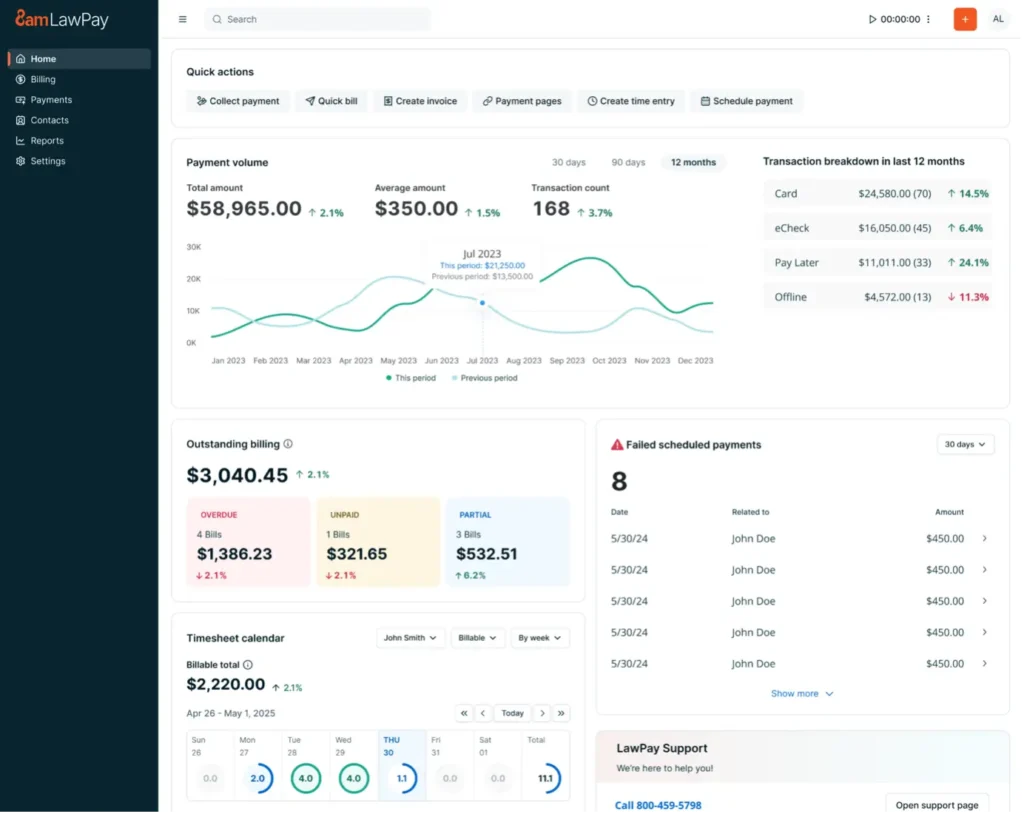
8am has moved toward a more unified platform. This move reflects a broader industry pattern rather than a unique claim about consolidation being inherently better. Many firms still rely on best-of-breed tools, and that approach can work well when the boundaries between systems are clear. What has changed is the assumption that integration is neutral, because it no longer is. Once systems converge, integration decisions shape accountability.
From a product standpoint, this shifts the work from connecting software to defining responsibility.
Spend control moves earlier, and the trade-offs become visible
Legal spend has traditionally been managed after the fact. Invoices arrive once work is complete, budgets are reviewed once costs are already incurred, and oversight operates at a distance from the moment money actually changes hands.
Across the legal tech market, there is growing interest in bringing spend awareness closer to the point of payment. 8am’s focus on spend visibility and payment-adjacent workflows fits within this wider shift, though different platforms approach it in different ways.
What is often underplayed is that earlier control introduces friction by design. Rules have to be articulated, exceptions have to be handled, and product teams are forced to encode policy decisions that were previously informal or implicit.
Resistance to this kind of control is not always about technology. It is often about autonomy, trust, and the discomfort of making expectations explicit. From a product perspective, this requires designing systems that surface trade-offs rather than pretending they don’t exist.
The broader lesson is not that early spend control is easy, but that late control offers reassurance without much influence.
AI becomes more credible as its scope narrows
The early phase of AI in legal tech was dominated by breadth. A lot of emphasis was placed on demonstrating how many tasks could be automated, summarized, or accelerated. Capability was the headline.
That emphasis is changing. Across the industry, product teams are becoming more selective, focusing on where AI can reliably support decision-making without obscuring responsibility. At 8am, AI is positioned within specific operational contexts rather than as a universal layer across all legal work, which aligns with Leslie Witt’s remit to ensure that new capabilities fit real workflows rather than abstract possibilities.
It’s important to be precise here. Not every legal tech company is taking the same approach, and there is no single model for “doing AI right.” What is consistent is a growing recognition that trust hinges on predictability, and that poorly scoped automation can create just about as many problems as it solves.
From a product leadership perspective, restraint signals an attempt to match technological capability with institutional reality.
Platforms are defined by the boundaries they set
The word “platform” is easy to claim and hard to earn. Once a system allows others to build on top of it through integrations, partners, or extensions, questions of coherence become unavoidable.
Product leaders have to decide what belongs at the center of the system and what should remain external. Build too much internally, and the product becomes unwieldy. Open too much, and it loses consistency.
At 8am, the ecosystem conversation reflects a broader challenge faced by maturing legal platforms: how to support partners and integrations without turning the product into an unstructured collection of add-ons. This is less a technical question than a product judgment about what the platform is ultimately responsible for delivering.
In that sense, platform design becomes an exercise in stewardship rather than expansion.
A familiar pattern, repeating itself
From a longer historical view, this moment is recognizable. Technologies often begin as tools, evolve into systems, and eventually take on institutional weight. Legal tech is now operating at a scale beyond mere efficiency, where decisions about integration, control, and automation shape behavior.
The work at this stage is not about adding more features. It is about deciding which responsibilities software should carry and which should remain human.
That shift may be less dramatic than early innovation, but it is usually where lasting systems are made.
Q&A with Leslie Witt, Chief Product Officer, 8am:
On integration:
- When systems start coming together, where do integration decisions stop being technical and start becoming political?
Leslie: “Integration stops being technical the moment customers feel consequences without clarity. As soon as data moves between systems that carry authority like billing, matter status, or approvals, the question becomes who is responsible when something is wrong. That is not an engineering problem. It is an ownership problem. Customers do not care which system caused the issue. They care about which one they can trust to resolve it. 8am’s approach to unifying matter and payment data ensures accountability is clear, so customers know exactly where to turn.”
- What’s the hardest thing to unify once products mature: data, teams, or expectations?
Leslie: “Expectations. Data can be mapped and teams can be aligned with time. Expectations are shaped by years of habit. Firms build mental models around how work flows, when money is reviewed, and where judgment lives. When products come together, those assumptions collide. The real work is helping customers reset expectations without feeling like control is being taken away.”
On money and control:
- Why has legal spend historically been managed so late in the process?
Leslie: “Because the industry built processes around professional trust rather than real-time visibility. Financial oversight typically happens after the work was completed because client matters typically take precedence over administrative processes, and that is when it was most convenient for legal teams to review. The downside is that by the time legal spend is visible, attorney influence is limited. The more time that passes, the less likely clients will be amenable to discuss or negotiate excesses.”
- Where do you see firms resisting earlier controls, and what do you think that resistance is really about?
Leslie: “8am’s policy-driven spend controls are designed to surface trade-offs transparently, helping customers adopt oversight earlier without feeling monitored. Resistance shows up when controls feel imposed rather than supportive. It is rarely about the mechanics of approval or budgets. It is about fear of slowing work or signaling mistrust. Our responsibility as product leaders is to design controls that feel like guardrails, not surveillance, and to make trade offs visible instead of hidden.”
On AI:
- What tells you a workflow is ready for AI support rather than full automation?
Leslie: “When the judgment criteria are consistent but the context still matters. If a task benefits from pattern recognition but requires a human to own the outcome, that is where AI fits best. Customers want support that sharpens decisions, not systems that quietly make them.”
- Are there places where the technology works, but you’ve still chosen not to deploy it?
Leslie: “Capability alone is not the bar. If deploying something would blur accountability or create false confidence, we pause. Customers trust us to be selective. Sometimes the most customer centered choice is restraint.”
On product discipline:
- How do you know when adding a feature would actually make the product worse?
Leslie: “When it introduces choice without clarity. If a feature adds surface area but does not reduce effort or uncertainty, it increases cognitive load. From a customer perspective, that feels like friction, even if the feature is well built. At 8am, product decisions prioritize simplicity and clarity, ensuring additions help customers make decisions faster, not just provide more options.”
On ecosystems:
- What makes an integration worth maintaining long term?
Leslie: “An integration is worth maintaining when it reduces uncertainty and carries clear responsibility. If the integration no longer reflects how customers operate, creates friction, or lacks ownership, it becomes an obstacle and should be removed or replaced. Conversely, if removing the integration would introduce risk, force manual checks, or weaken trust in decisions, this indicates it has proven its value to the organization and should be embraced.”
- How do you keep a platform coherent while letting others build on top of it?
Leslie: “By being explicit about what we own. The platform has to carry responsibility for core outcomes. Everything else should extend that clarity, not compete with it. Customers experience coherence when they always know where to go for answers, regardless of how many partners are involved. 8am enforces these boundaries through guided integration standards, so customers always know where to go for authoritative answers, even as third-party tools complement the platform.”