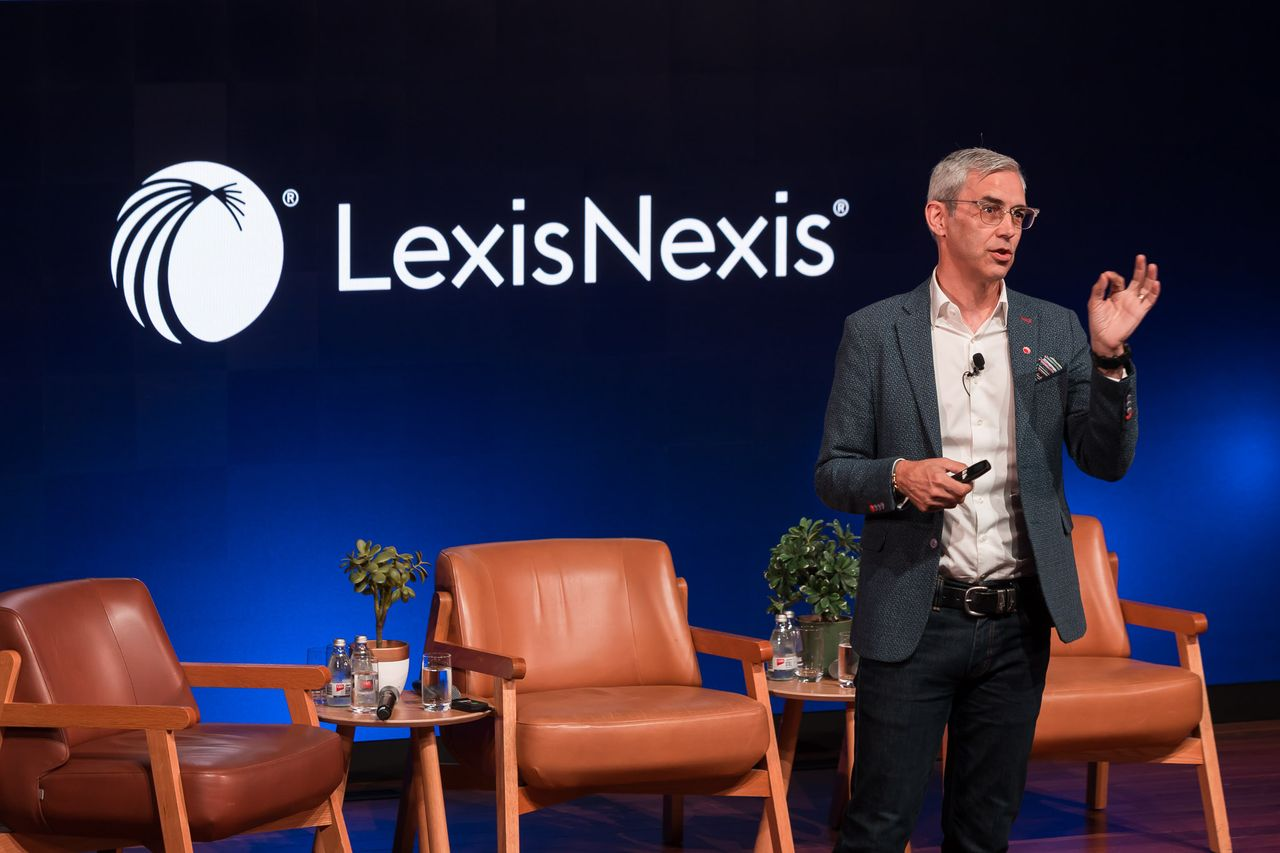

On 27 October, LexisNexis announced an expansion of Lexis+ with Protégé, bringing authoritative legal content, specialised analytics, news, dockets, firm knowledge and verification into a single prompt box. The announcement follows hundreds of studies and focus groups conducted this year with more than 7,000 legal professionals across Am Law 10 firms, in-house teams and solo practices, which pointed to a consistent set of pain points. The pain points were: moving between AI environments to complete a matter, losing context between systems, reformatting AI-generated output, and repeatedly checking citations and conclusions before relying on them.
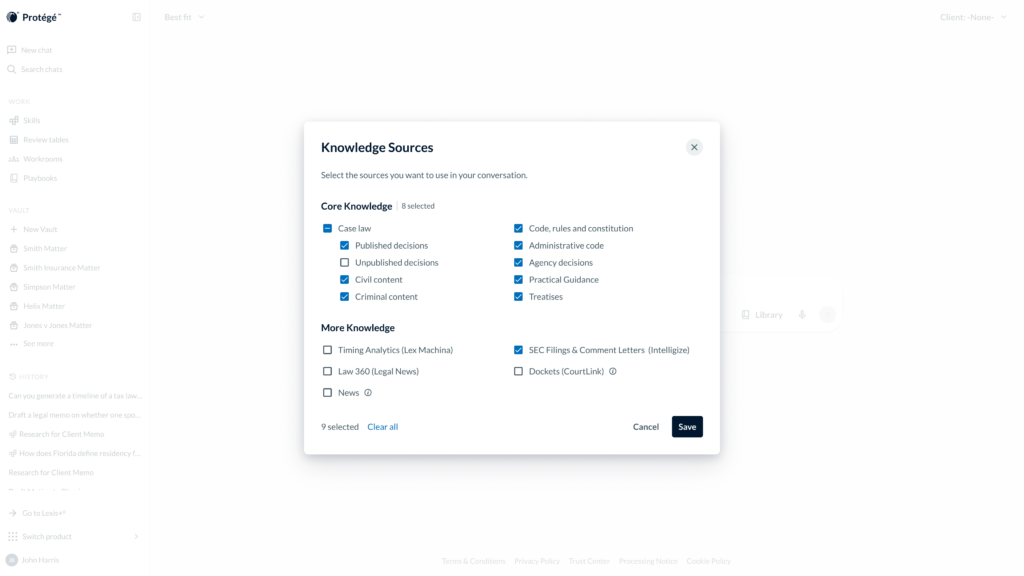
The expansion sits on what LexisNexis calls a proprietary legal harness, which coordinates models, agents, tools and sources behind the single interface. New and enhanced capabilities include Shepard’s Verify, which now checks citations across AI-assisted and lawyer-drafted documents; native Microsoft Word drafting that preserves firm styles, numbering, footnotes, tables of authorities and tracked changes; source-linked Review Tables that run a question across every document in a matter; an expanded Vault that handles up to 100,000 documents and 14 file types including deposition video; Workrooms with memory and governance controls; and a Skills Library of 100 new legal skills alongside a no-code Custom Skills Builder. Lexis+ with Protégé is rolling out to US customers this month, with global availability to follow.
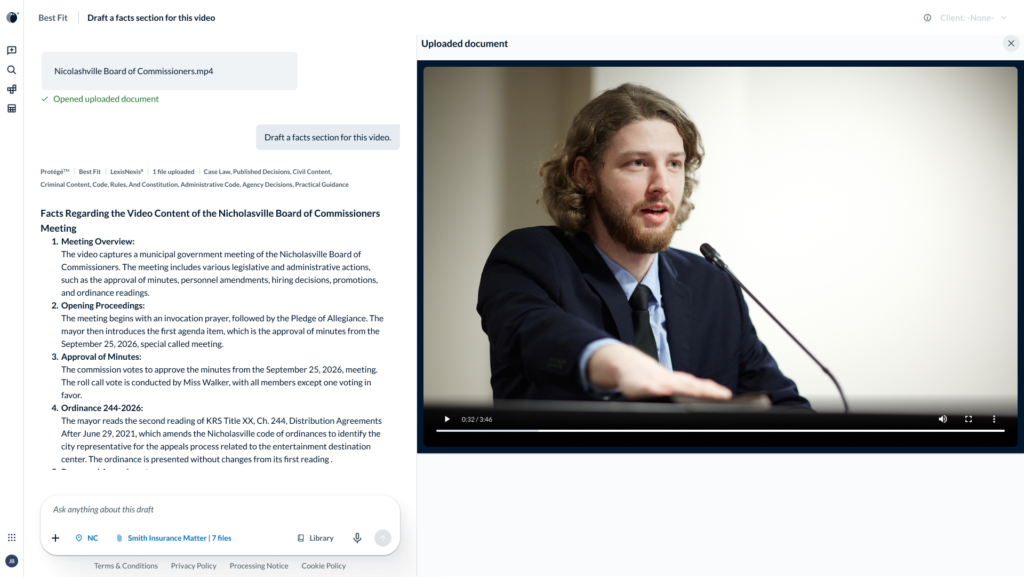
Off the back of the release, we put a few questions to Greg Dickason, CTO at LexisNexis. His responses are below.
TLW: The release describes a “proprietary legal harness” that coordinates models, agents, tools and sources. In technical terms, what does the harness do that a well-built retrieval layer on top of a frontier model does not, and which parts of it do you think will be hardest for the foundation model labs to replicate as they move further into legal work?
Greg: “Our proprietary legal harness goes well beyond retrieving information and generating an answer. It’s an end-to-end system that loops on reasoning and allows the agent to determine if there is more work to do, or an angle to explore, before returning to the end user. This includes which specialized tools should be invoked for legal tasks like generating documents or conducting specialized research using Lex Machina, Intelligize, and other LexisNexis capabilities.
What is particularly difficult to replicate is a legal-specific harness that understands how to apply legal reasoning across complex, multi-step tasks, supported by authoritative legal content, specialized analytics, and verification capabilities. That’s where our decades of legal expertise and investment provide a significant advantage.”
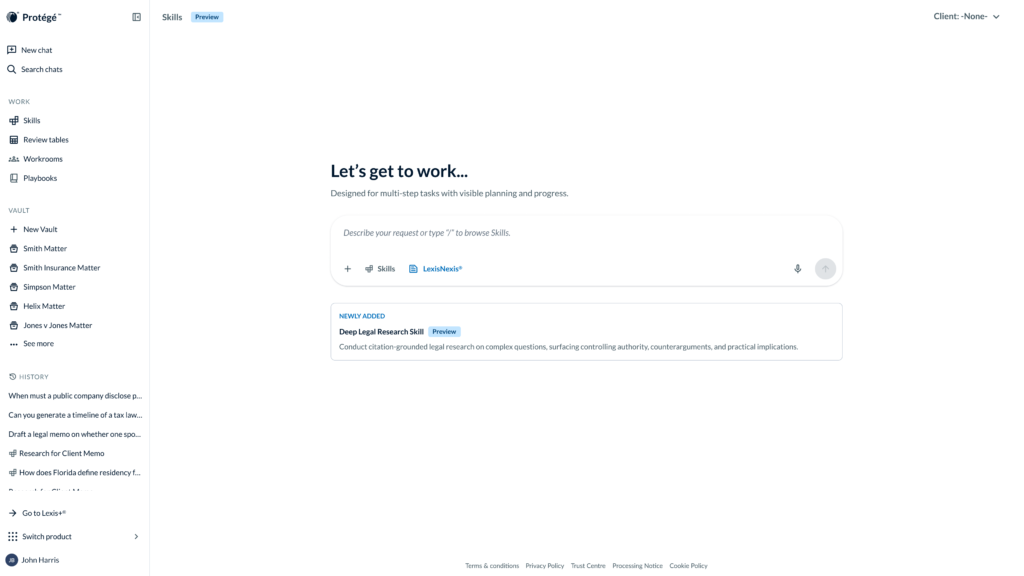
TLW: Shepard’s Verify checks whether cited authority supports the proposition it is cited for. How do you evaluate that internally, can you share accuracy figures, and does it work the same way on documents drafted outside Protégé?
Greg: “Shepard’s Verify works with both internally drafted and externally drafted documents. We evaluate its performance against established test sets to ensure accuracy exceeds human-level benchmarks, and we continuously refine its performance.”
TLW: The release positions Protégé as the answer to switching between tools, but many firms will keep running several AI products. Will LexisNexis content and Shepard’s be available inside other AI environments, for example via MCP or an API, or is the goal to bring the work into Protégé?
Greg: “We will meet legal professionals where they work, giving them access to trusted LexisNexis legal intelligence, context and verification capabilities to support accurate, reliable results. Our announced alliances with EvenUp and Luminance are two examples of this approach.”
TLW: For existing Lexis+ customers, what changes in practice from day one and will any of the new capabilities come at an additional cost?
Greg: “For existing customers, this expansion brings more of our legal intelligence, specialized tools, and advanced AI capabilities together through Lexis+ with Protégé, including connections to Lex Machina, Intelligize, CourtLink and Law360 intelligence alongside authoritative legal content and firm knowledge; enhanced Shepard’s Verify and Deep Research; native Word drafting, source-linked Review Tables, expanded Vault capabilities and Workrooms with memory and governance controls; and 100 new legal skills with the ability to create custom skills without coding. Together, these capabilities help lawyers move more easily from a question to complex legal work, with greater context, verification and less switching between tools. Access to connected sources and specific capabilities depends on subscription, customer configuration and administrator permissions.”
TLW: Which type of client do you expect to benefit most from this expansion: large firms, in-house teams or smaller practices?
Greg: “We believe this is the next step in legal intelligence, and it benefits all legal professionals. The challenges we’re addressing — including fragmented tools, lost context, repeated tasks and verification — affect lawyers across the profession.”