
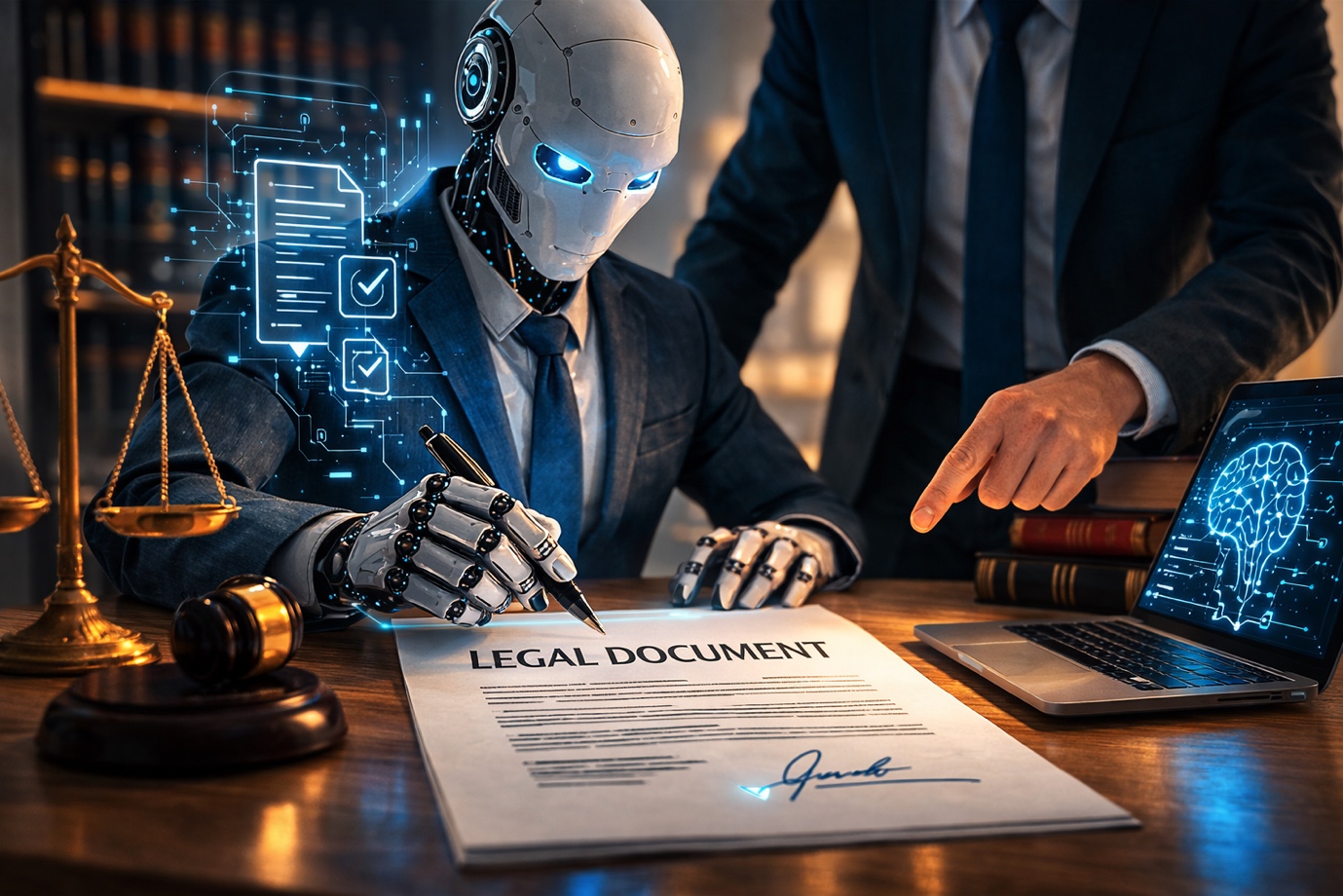

Over the past few days, a curious narrative has been circulating across LinkedIn: Y Combinator has told founders to build AI-powered law firms and compete directly with lawyers.
The posts have been getting serious traction. Comment sections are packed with lawyers debating regulation, malpractice, unauthorized practice of law, and whether Silicon Valley is about to “Uber” the legal industry.
There’s just one problem. It’s surprisingly difficult to find any evidence that Y Combinator actually said this, at least, in so many words.
I spent some time looking for the original source by scouring YC blog posts, Requests for Startups, batch announcements and more, and came up empty. Several commenters across LinkedIn have pointed out the same thing. The claim appears to have taken on a life of its own. Ironically, the debate about AI replacing lawyers may itself have been triggered by an unverified claim about AI.
But even if the premise is shaky, the discussion it sparked is genuinely interesting. Because it touches on a question that the legal industry is quietly grappling with: Could AI-native law firms actually work? Not “AI tools for lawyers.” Actual firms where AI performs most of the work and human lawyers step in for the final layer of judgment.

At first glance, the idea sounds radical. But when you look closer, it’s less revolutionary than people think. In fact, versions of this model are already emerging. Some new legal service providers are experimenting with structures where AI handles the heavy lifting, including drafting, research, document generation, while licensed lawyers review and sign off on the output. The economics are different from the traditional law firm structure, where a large base of associates performs the bulk of the work.
Instead, imagine a much flatter structure: a small number of experienced lawyers sitting on top of an AI-powered production layer, which doesn’t eliminate lawyers, but does change how legal work gets produced.
And this is really where the debate becomes more interesting.
Much of the conversation frames the issue as AI vs lawyers, but a more useful distinction is between two different layers of legal work: production and accountability. The production layer is where most of the repetitive work lives. Drafting contracts. Reviewing documents. Summarizing case law. Preparing filings.
These are precisely the kinds of tasks that AI is becoming very good at compressing, although the legal system isn’t built only on production, its also built on accountability. At the end of the day, someone still has to sign the document, someone still has to defend the interpretation, and someone still carries the malpractice liability if things go wrong. That layer doesn’t disappear just because the drafting process becomes faster. You can compress the cost of producing legal work. But you can’t compress responsibility.
That’s why the idea of AI-native law firms runs into a different set of challenges than typical startups.
It’s not just building software that’s in question. This debate requires full consideration of the regulatory architecture of the legal profession: licensing rules, unauthorized practice restrictions, ownership limitations, conflicts of interest, privilege, malpractice insurance, and professional oversight. In most jurisdictions, non-lawyers cannot own law firms. In others, alternative structures are only beginning to emerge.
These constraints don’t exist in industries like transportation or hospitality, which is why comparisons to Uber or Airbnb often miss the mark. Legal services operate inside a framework designed to ensure that someone is ultimately accountable for the advice being given. That doesn’t mean the industry won’t change, as it almost certainly will, but the disruption may look different from the Silicon Valley narrative.
Instead of AI startups replacing law firms outright, we’re seeing a combination of developments: law firms integrating AI deeper into their workflows, new boutique firms built around technology-first models, and in-house legal teams handling more work themselves using increasingly capable AI systems. In other words, the production layer of legal work may change dramatically. The accountability layer will probably remain.
Which brings us back to the LinkedIn debate that started all of this.
Whether or not Y Combinator actually told founders to build AI law firms may ultimately be beside the point. The fact that the idea spread so quickly says something about the moment the legal industry is in.
AI is already reshaping how legal work gets done. The open question isn’t whether lawyers disappear. The open question is how the economics, structure, and expectations of legal services evolve when the cost of producing legal work starts to fall.
And that’s a far more interesting conversation than the viral headline that started it.