
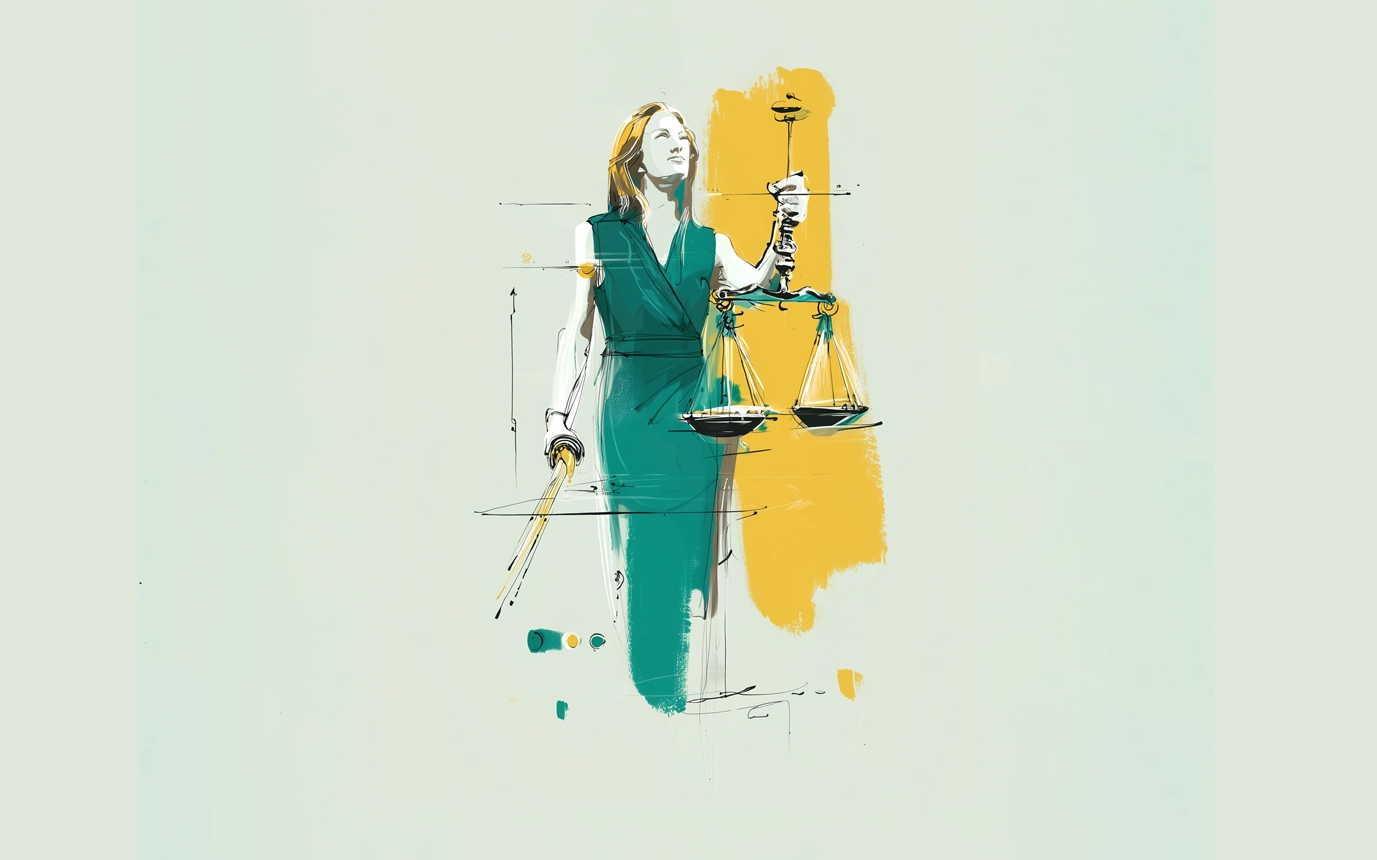

Justice Finance pioneer Edenreach unveils white paper showing how blending AI and mission-aligned funding can unlock access to justice for billions worldwide
London, 3 March 2026 – A new report published today reveals how emerging technologies and an injection of ethical capital can help bridge the global justice gap affecting an estimated 5.1 billion people*, two-thirds of the world’s population.
Bridging the Justice Gap: How Technology and Ethical Capital Can Accelerate Access to Justice, commissioned by justice fintech Edenreach and building on research by the British Institute of International and Comparative Law (BIICL), explores how AI and new capital pools can play a major role in helping more people access justice. The white paper posits that AI-enabled platforms can connect mission-aligned capital, such as donor-advised funds, philanthropic investment portfolios, and impact investment funds, with legal cases that deliver measurable social and environmental outcomes, alongside competitive returns.
The Scale of the Problem
BIICL’s foundational research identified three intersecting barriers preventing vulnerable communities from accessing justice: economic hardship and geographic isolation (situational exclusion); complex legal issues requiring specialist support (issue-based exclusion); and systemic discrimination affecting marginalised groups (group-based exclusion). These barriers are compounded by systemic legal aid cuts and limited funding for pro bono and NGO legal services.
The research shows that without access to funding, critical cases with the potential for positive societal and environmental impact simply aren’t being pursued, leaving government departments and commercial bodies unchallenged when they fail in their duties to the public and the environment.
Melina Gisler, Edenreach co-founder, said: “Without mission-aligned financing, important cases aren’t being pursued, meaning fewer positive social and environmental causes getting the attention and outcomes we need. Technology can turn legal cases with the potential for positive ESG outcomes into investible assets, unlocking a new frontier of justice-led innovation.”
The Solution: Technology Meets Ethical Capital
The white paper identifies two major opportunities to transform access to justice:
1. AI and Smart Technologies
According to BIICL, “AI can help bridge the justice gap, enabling legal professionals and organisations to serve more people, more effectively.” Beyond driving efficiency through improved document drafting and streamlined case management, technology plays a critical role in expanding reach to underserved communities. AI can provide real-time translation services for non-native speakers, deliver plain-language explanations of legal rights and processes, and match individuals with relevant legal resources based on their specific circumstances, scaling access to justice in ways that manual processes simply cannot.
2. Mission-Aligned Capital
A largely untapped $3.33 trillion ethical capital market (GIIN 2024, NPT 2024) exists globally, but lacks the infrastructure to channel funding toward impactful justice outcomes. Unlike traditional case funding like litigation financing, which prioritises financial returns above all else, ethical capital holders look for positive environmental and social outcomes, and can expect a competitive financial return on investment. But they will require trusted ethical tracking and reporting, aligned to globally recognised and measurable criteria, to effectively scale.
The report shows how technology can enable trust and consistency by evaluating legal cases against existing frameworks and standards (such as the UN Sustainable Development Goals) with measurable reporting on environmental, social and governance (ESG) performance.
Kayee Cheung, Edenreach co-founder, added: “Mission-aligned capital pools exist. Case pipelines and legal structures exist. What’s missing is the infrastructure to channel the capital towards impactful justice outcomes. Edenreach exists to build that bridge.”
Creating a New Asset Class
The report demonstrates how “Justice Finance”, connecting ethical capital with ESG-aligned legal cases, such as UN’s 17 Sustainable Development Goals, positions legal financing not as an opaque, risky bet, but as a new category of investable impact assets delivering both competitive financial returns and measurable social and environmental returns, while also holding governance to account.
Case examples in the report span environmental protection (halting coal power plants), consumer protection (J&J talc class action), workers’ rights (Next equal pay case), and corporate governance and accountability; all demonstrating the broad societal impact of mission-aligned legal funding.
Expert Perspectives
Clare Carter, CEO of the Access to Justice Foundation, said: “We hear a lot about the crisis in the justice system, but not enough about implementing workable solutions. This report shines a light on two of the most important opportunities to bring about real improvements for vulnerable people with legal problems. If we can increase available funding through accessing ethical capital and materially improve service delivery through effective use of technology, we can transform access to justice.”
Stephen Kinsella of Law for Change, said: “Parliamentarians constantly pass new laws without reflecting how they will be enforced in practice. As a result, millions of citizens are denied fundamental rights every day, in large part because pursuing justice is often prohibitively expensive. And yet, if we give up, then too many government departments and commercial bodies will simply continue to fail in their duties to the public and to the environment. We need real-world solutions to connect those seeking justice with the funds to make it possible.”
International Women’s Day Context
The report’s launch coincides with Women’s History Month and precedes International Women’s Day on 8 March. This timing reflects a stark reality: women are disproportionately affected by access to justice barriers. Research shows that globally, 53% of women report experiencing a legal problem in the last two years, yet only 13% turned to an authority or third party for help (World Justice Project).
Edenreach’s two female co-founders, Melina Gisler and Kayee Cheung, are pioneering a new model of justice finance that serves the communities most affected by the justice gap — and in doing so, building infrastructure that can expand access to justice for all.
ENDS
*Source: https://worldjusticeproject.org/our-work/research-and-data/measuring-justice-gap
Notes to Editors
PR Contact
For more information or to arrange an interview with Edenreach co-founders, please contact Stephanie Boyle
Whatsapp: 07982 199 915
Email: stephanie@arwencommunications.com
Download the white paper: https://edenreach.com/about-us/bridging-the-justice-gap-report/
About the Research
The white paper Bridging the Justice Gap is based on research by the British Institute of International and Comparative Law (BIICL), funded by Innovate UK. The research was conducted by Iris Anastasiadou and Dr Jean-Pierre Gauci. Full report available at: http://bit.ly/4qYjyop
About Edenreach
Edenreach is a female-founded justice fintech that connects ethical capital with legal cases delivering measurable social and environmental impact. Supported by proprietary AI case evaluation mapped against the UN’s 17 Sustainable Development Goals, Edenreach provides justice asset assessment, tracking and reporting — positioning Justice Finance as a new category of investable impact asset.
Website:www.edenreach.com | Email: info@edenreach.com
About BIICL
The British Institute of International and Comparative Law (BIICL) is a leading independent research organisation.