

Ask any solo or boutique lawyer how much time they spend searching for clauses, verifying edits, or wrangling Word documents, and the answer will probably be “too much”. That’s the concern that led Lexifina to enter the legal technology scene: not as a writing tool, but as a drafting assistant designed to seamlessly plug into legal professionals’ workspace. This involves Word-based workflows, granular clause-level control, and built-in redlining that reflects live client, jurisdiction, and firm data.
This week, The Legal Wire spoke with CEO and founder of Lexifina, Alan Yahya, about building a disciplined, Word-native drafting and review environment designed specifically for solo and boutique law firms.
TLW: Alan, Lexifina treats legal documents as ‘first-class citizens.’ How does that shift in framing influence how the platform approaches redlining, version control, and drafting workflows?
Alan: “The key is to strongly enforce the structure and the relationships in a document. As anyone who has worked with low-level file formats can attest, this requires a tremendous amount of effort but is central to unlocking precise and relevant redlining. For example, this allows us to prevent seemingly similar clauses from being re-used, when the surrounding context is significantly different.”
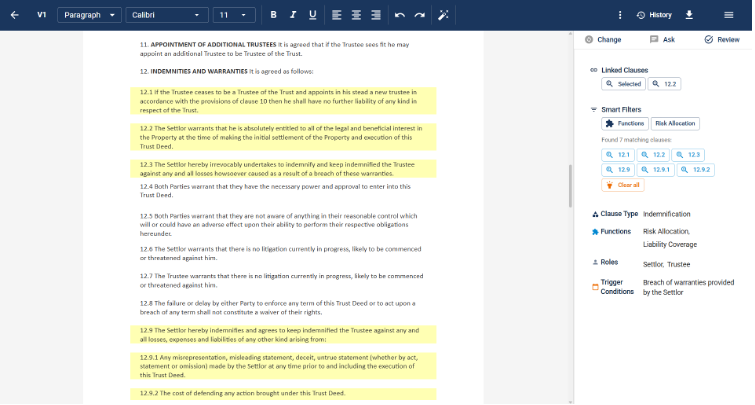
Lexifina aims to do more than layer AI onto existing work; it rethinks legal document work from the ground-up. Every edit is tracked with visible prompts and sources. Clauses are reviewed in context, with citations and document history a click away. Lexifina brings in relevant caselaw and templates from your own firm’s prior work, instead of generic results from the open web. There’s a thoughtfulness to the experience that has been engineered for solos and boutique firms. Features like intakes, document editing, and signature executionare all part of one continuous workflow.
Precision, Control, and No Guesswork
Lexifina is, ultimately, a tailored infrastructure layer for legal work. It delivers:
- Audit trails that easily identify inconsistencies across documents.
- Client intake tools that evolve into living documents.
- Document automation that balances out-of-the-box templates with customization.
- Legal search that lets you filter by date, author, citations, and more.
Crucially, Lexifina builds onto this already solid infrastructure with trust at the core: AES-256 encryption, full GDPR compliance, zero data used for training, and user-defined retention policies.
TLW: Lexifina places strong emphasis on traceability and data control. Why is that especially important for small firms, and how do you ensure it doesn’t come at the expense of usability?
Alan: “Smaller firms are particularly concerned about client data and abiding by practice regulations. Given the nature of the legal industry, it naturally takes precedence over any product concerns. By innovating the audit system, from simple inclusions like storing prompts, to referencing exact files and edits, we improve the ability of the user to trust our system and use it responsibly.”
The AI Market Is Hot, But Crowded
The legal tech scene is full of generative AI tools right now, many of them racing to differentiate on bells and whistles. Lexifina chose to stay focused and to keep the product simple, practical, and built around real drafting habits. It’s designed for users who seek clarity above all else.
TLW: The legal tech space is packed with new entrants. What’s your view on the current wave of legal AI tools, and how do you see Lexifina carving out a long-term position in this evolving landscape?
Alan: “The fundamental technology is still somewhat immature, let alone the secondary legal tech market. I think the onus on legal tech companies is to focus on what’s proven to work well, such as information retrieval, rather than going down the rabbit hole of trying to innovate fundamental machine learning workflows. For example, autonomous agents work great for demos but have a huge failure mode in real practice.”
Lexifina’s customer base, primarily solo practitioners and boutique UK firms, is not always at the forefront of large-scale legal tech platforms’ target audience. But these firms are often where the most bespoke, high-stakes drafting happens. Lexifina gives them tools that adapt to their voice, style, and risk tolerance.
TLW: You work closely with boutique firms. What have you learned from partnering with smaller firms, and how has that influenced Lexifina’s product roadmap?
Alan: “The number one feedback from practitioners is they want simplicity. A simple, intuitive product which reduces their cognitive load- and maybe some customisation only where it is truly effective.”
In a market full of AI chatbots for lawyers, Lexifina is something else: a serious drafting and review environment, built to match how real lawyers think, write, and argue. It won’t write your brief for you, but it may well help you write a better one.