
Frontline Justice, a national nonprofit dedicated to closing the access-to-justice gap, and Josef Legal, a legal AI company, today announced the roll-out of Frontline Q, an AI assistant purpose-built to help community advocates and justice workers determine whether families qualify for benefits under the Supplemental Nutrition Assistance Program (SNAP), and challenge wrongful denials where they arise. The tool will initially be deployed across three states: Arizona, Texas and Alaska.
SNAP is the United States’ largest food safety net, supporting more than forty million low-income Americans, close to three-quarters of whom live at or below the federal poverty line. Recent federal changes enacted in H.R. 1, sometimes referred to as the Big Beautiful Bill, have introduced substantial new eligibility complexity into a system that was already difficult for applicants to navigate without expert help. In Alaska, wrongful terminations reached 87% in 2023, forcing thousands of families out of the programme despite remaining eligible.
Frontline Q is designed to sit inside a justice worker client consultation. Rather than requiring an advocate to work through dense policy manuals and legal citations, the tool takes the details of a specific household’s situation and returns clear, explainable guidance on whether the family qualifies and what the appropriate next steps are. The verified, source-linked format is intended to give community workers, who are rarely lawyers, the confidence to advise clients in real time and to challenge denials that have been issued in error.
For an organisation like Frontline Justice, the tool represents an attempt to scale legal access without proportionally scaling legal expertise, in a moment when the wrongful-denial problem is meaningfully larger than the country’s public-interest legal capacity.
For Josef, it is an application of the same underlying technology it deploys commercially, redirected toward a category of user with none of the resources of its usual customers.
The Legal Wire reached out to Nikole Nelson, CEO of Frontline Justice, and Sam Flynn, co-founder of Josef, on the significance of the roll-out.
TLW to Nikole: For readers less familiar with how SNAP eligibility denials happen at scale, could you walk us through what has changed in the system since H.R. 1, and how that translates into families being wrongly cut off from benefits they still qualify for? What does Frontline Q change about how a community advocate responds to that situation on the ground?
Nikole: “The new federal legislation, H.R. 1 (“the Big Beautiful Bill”), introduced administrative requirements for those trying to access SNAP and Medicaid benefits, including mandating that recipients verify that they have complied with, or are exempt from, new work requirements. Many people will lose benefits not because they don’t qualify, but because they have trouble documenting their hours, are exempt due to disabilities or caregiving duties, or simply because of administrative errors. Trained community advocates are particularly useful here. They help people appeal wrongful denials and verify completion of mandated hours or exemptions. Frontline Q supports community advocates by helping them advocate more efficiently and effectively and by scaling supervision and training.”
TLW to Nikole: Frontline Justice is a public-interest organisation deploying AI at exactly the moment much of the wider legal community remains sceptical of it. What made you confident that this was the right technology, and the right partner, to build the country’s access-to-justice response around, and what do you think other public-interest organisations should be watching for as they consider similar deployments?
Nikole: “We chose Josef as our technology partner for a couple of reasons. Most importantly, Josef was built specifically as a legal compliance tool. It draws only from trusted, vetted sources and has a moderation function that requires all answers to be approved by a supervising attorney before being shared with community justice workers. Also, Frontline Q is not deployed as a public-facing tool. Instead, it is used in an attorney-supervised setting by community justice workers and advocates. I would recommend that anyone considering a similar deployment build these guardrails into their tool too.”
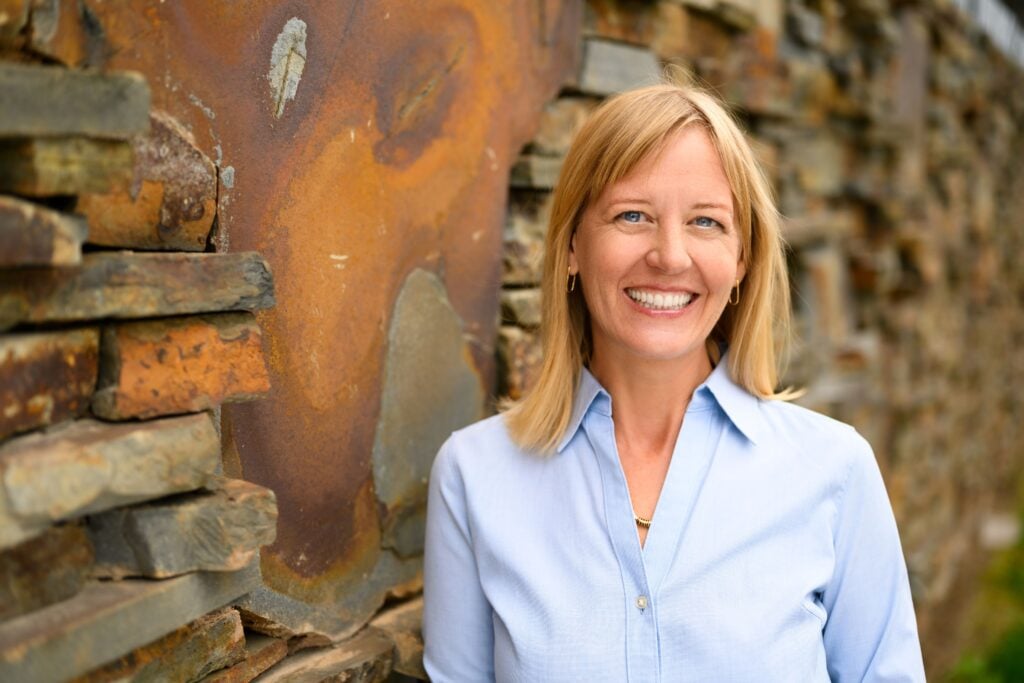
TLW to Sam: Josef’s commercial customers and Frontline Q’s users are, on the face of it, very different: enterprise legal teams on one side, community advocates and justice workers on the other. What did Josef have to build, adapt or think about differently to make the same underlying technology work reliably for a non-lawyer user advising a family in real time, where a wrong answer has immediate human consequences?
Sam: “While in-house corporate legal departments are Josef’s bread and butter, we have always worked with legal aid because of our mission: making legal services accessible for all.
Even though corporate legal and frontline justice workers seem worlds apart, they share many of the same pain points: zero room for error, excess demand, scarce resources, and high-volume work. To make Frontline Q work in this context, we didn’t change our core tech: we’re using the same technology that global enterprises like L’Oreal and adidas trust every day.
That said, there are big differences are in the tech stack, business users’ needs, and deployment models. For example, we need to make sure our tools are available to Community Justice Workers in the field, rather than at their desktop.”
TLW to Sam: Access-to-justice work has historically struggled to attract the same technology investment as commercial legal AI. What would it take, in your view, to change that, and what does the Frontline Q roll-out demonstrate about the model of a commercial legal tech company partnering with a public-interest organisation, rather than trying to serve that market alone?
Sam: “Josef actually started out as a pro bono project. My co-founders, Tom (Dreyfus), Kirill (Liavin), and I spent our weekends building tools for legal aid organizations because we loved it. As we started getting organic interest from commercial teams, we asked ourselves: “Wait, should this be a for-profit business?”
Our answer was a categorical “yes”, because we knew that the key to unlocking this movement was building the best tech possible. That said, I don’t think this is the only model for driving better access to justice. Upsolve is a great example here in New York, which is entirely funded by philanthropic organizations.”

Click here to read the full press release.