
For corporate deal teams, the closing phase of a transaction has long been synonymous with manual processes and operational chaos. Overflowing inboxes, closing checklists that require constant updates, difficulty tracking document versions, countless signature packets, and the time required to assemble closing sets are familiar pain points, especially as deal complexity increases. These administrative challenges have been treated as an unavoidable part of legal transaction work. DealCloser was built on the premise that they don’t have to be.
DealCloser is a transaction management platform that facilitates and automates closing processes, enabling deal teams to collaborate in real time and maintain visibility across every stage of a transaction, from the initial terms sheet through post-closing deliverables.
Launched in 2016, DealCloser emerged in response to growing market demand for a better way to execute transactions. Law firms and legal teams were increasingly seeking a purpose-built solution from a vendor focused exclusively on deal execution — one that could replace fragmented tools and manual workflows with a single, intelligent platform. DealCloser was created to meet that need.
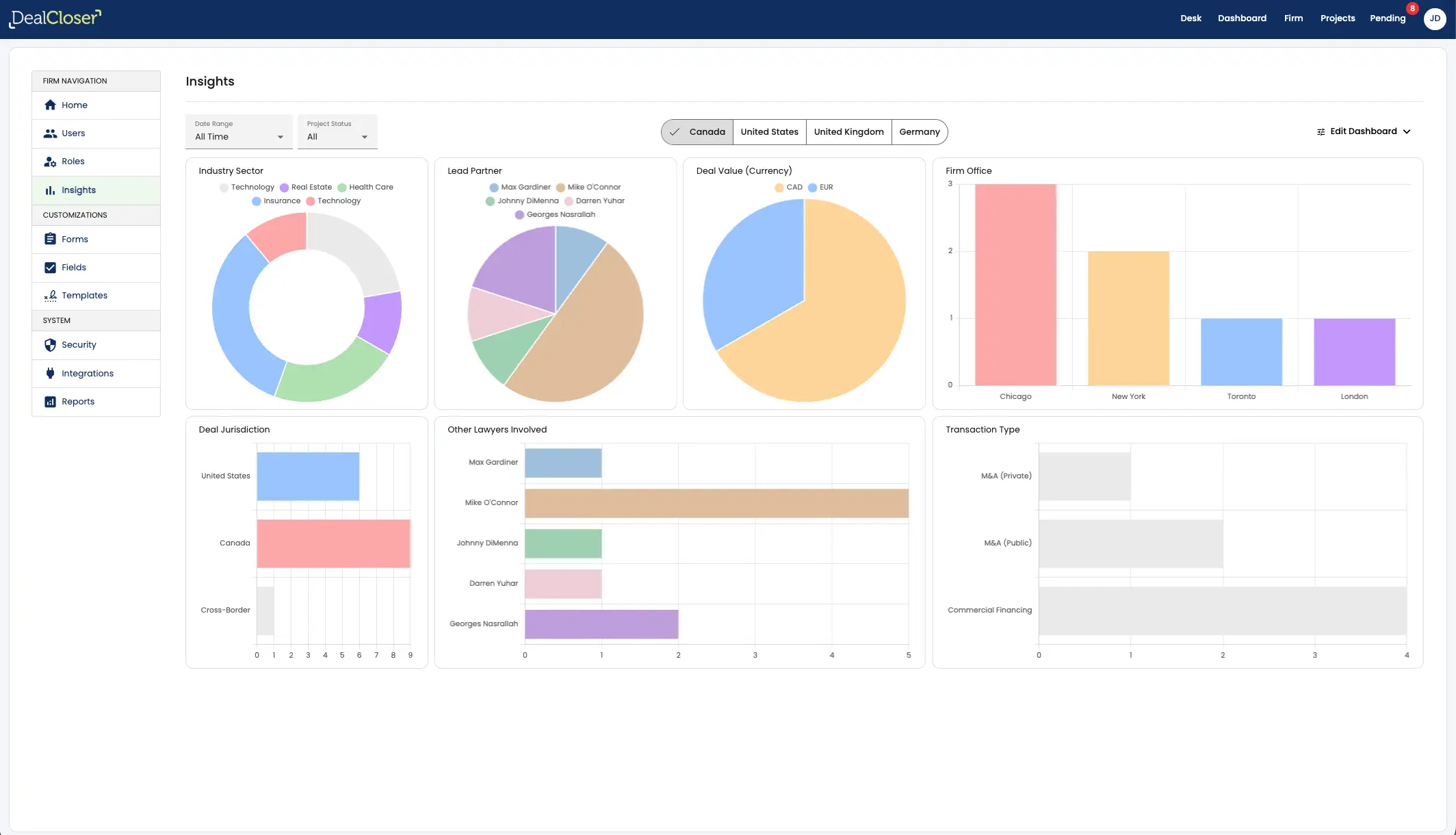
Today, the company is led by CEO Jag Dhariwal, a serial entrepreneur with deep experience on the client side of complex transactions. Recognizing the same systemic issues — limited transparency, delayed updates, and manual processes that drive up cost and risk — Jag has guided DealCloser’s evolution into a global legal tech provider.
DealCloser now supports firms in eight countries, serving organizations ranging from boutique practices to Am Law 50 firms and in-house legal teams. The company continues to push the category forward, most recently as the first transaction management platform to introduce an AI Deal Assistant embedded across the full deal lifecycle.
Where Legal Tech Meets Modern Product Design
Unlike traditional document management systems or generic project-tracking tools, DealCloser was built specifically for the way legal teams execute transactions. Instead of relying on endless email threads and manual follow-ups, deal teams work from shared, collaborative checklists that keep everyone aligned. The platform integrates directly with document management systems like iManage and NetDocuments, tracks and compares document versions as they evolve, automates the creation and collection of signature pages, and assembles firm-branded closing sets in minutes rather than days.
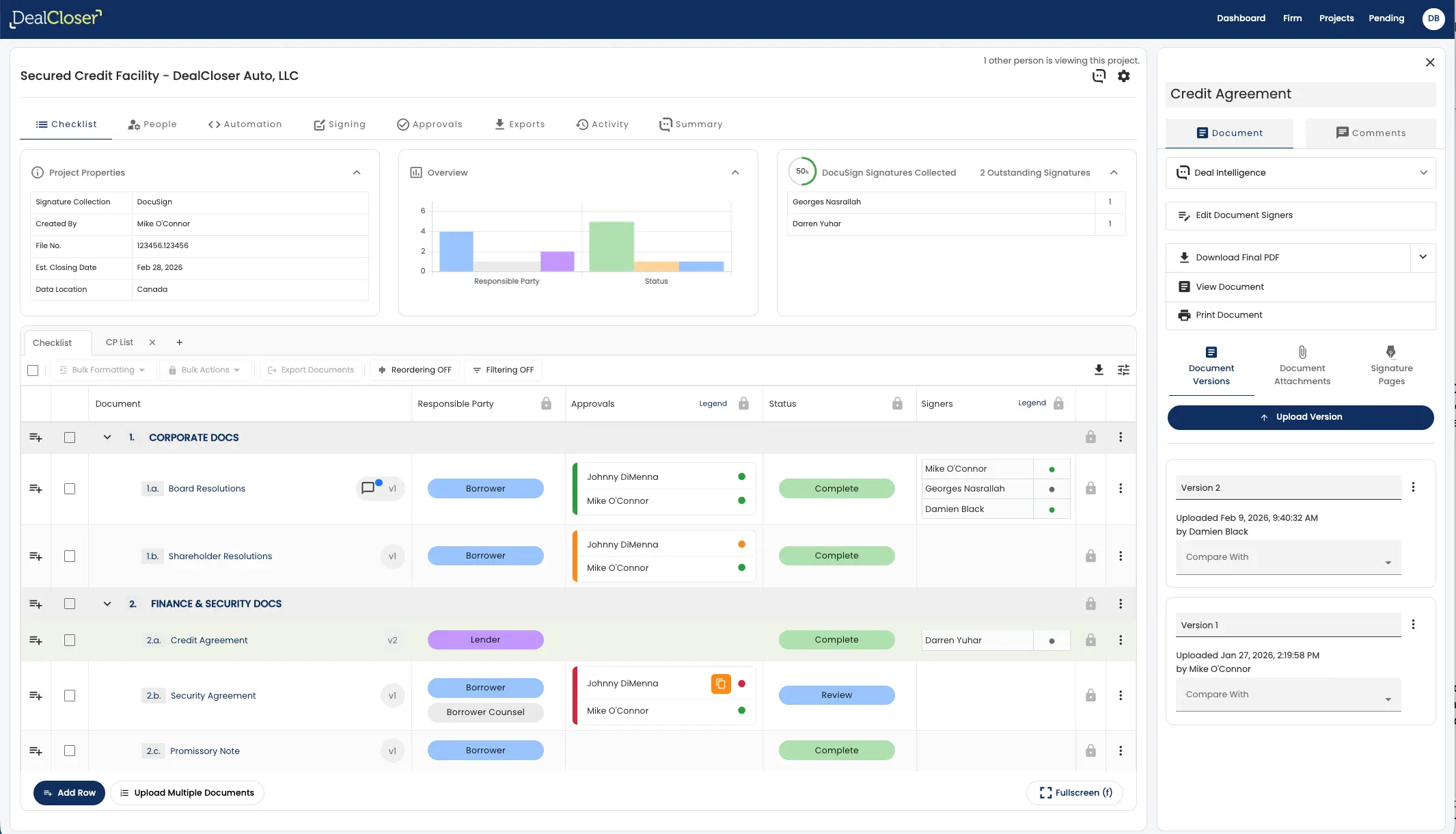
The impact is felt on both sides of the deal. For law firms, DealCloser removes much of the administrative drag that has historically slowed transactions, allowing teams to manage more matters without expanding headcount. For clients, it replaces uncertainty with clarity — offering real-time updates, always-on access to deal status, and a more modern, transparent closing experience that builds confidence from start to finish.
TLW: Jag, as someone with extensive experience on the client side of transactions, now leading a business that’s set out to improve transactions from every angle, what specific friction points does DealCloser most focus on rethinking for deal teams?
“A lot of what slows deals down is the repetitive, low-value admin work that lawyers are expected to just live with—things that aren’t billable, eat up time, and ultimately contribute to burnout. That’s the stuff we’re focused on rethinking,” says Jag. “Signature management is a great example. What used to take hours now takes seconds. You upload the documents, DealCloser automatically pulls the signature pages, places the Docusign tags, and lets teams quickly review everything before it goes out. It removes the busywork without sacrificing control. And just to be clear, we’re not trying to replace lawyers. DealCloser and our AI Deal Assistant are here to support legal teams and help them do their best work.”
More Than Efficiency: Oversight and Accuracy
DealCloser’s integrations with Microsoft Word and Thomson Reuters tools like CoCounsel and HighQ reflect a broader ambition: full-lifecycle transaction management. Teams can manage transactions end-to-end, from due diligence through post-closing, collaboratively editing documents in Microsoft Word Online, using in-app redlining, syncing back to their DMS of choice, and relying on document variables to keep key dates and terms consistent across hundreds of pages.
Together, these capabilities create a more cohesive experience and reduce the risk of human error, one of the most persistent pain points in complex or high-volume deals.
TLW: Document variables and auto-generated signature packets sound simple but solve big problems. How did DealCloser approach building these in a way that legal teams would trust and be willing to adopt?
Jag: “Trust comes from familiarity. We intentionally built document variables in a way that feels very close to how firms already work today. For example, we use the same curly-bracket placeholders lawyers already have in their precedent documents, so there’s no new syntax to learn. And before anything goes out, teams can review the changes directly in the app, which gives them confidence that everything’s been applied correctly.
We took the same approach with signature packets. Firms can create signature page templates using Word-style formatting controls they’re already comfortable with, preview everything in advance, and make sure it aligns with their firm’s standards. The goal is to make powerful automation feel intuitive and trustworthy.”
Making Complex Closings Less of a Frenzy
One of DealCloser’s more underrated features is its granular permissions system. Legal teams can lock down checklist columns and rows, limit document access by organization or individual party, and even use “proxy view” to see exactly what outside stakeholders will experience. For deals involving multiple parties, multiple jurisdictions, and large volumes of sensitive data, this level of control is critical.
TLW: From a tech architecture perspective, how do you balance ease of use with the complexity of permissions, DMS integrations, and compliance expectations across firms?
Jag: “Security and compliance are non-negotiable for us. It’s built into the platform from day one and vetted by firms around the world. At the same time, none of that matters if the product feels hard to use. So we’re obsessive about keeping the experience intuitive, even with all the complexity happening behind the scenes. A big part of that balance comes from how we support our customers. We guide firms through onboarding, handle the backend complexity with them, and continue to invest in in-product guidance and hands-on support. That combination is what allows us to deliver enterprise-grade security without making the platform feel heavy or hard to adopt.”
The Thomson Reuters Ecosystem Play
Since joining the Thomson Reuters partner ecosystem, DealCloser has positioned itself as part of a much larger puzzle. Combined with HighQ and CoCounsel, the goal is to offer an end-to-end solution for transactional lawyers, from deal setup to regulatory compliance and post-closing analysis.
It’s also a response to a fragmented legal tech landscape, where many tools solve only part of the problem. With DealCloser, the aim is not just to digitize a few closing steps, but to provide one integrated, consistent, and secure environment for the entire transaction lifecycle.
TLW: What does being part of the Thomson Reuters ecosystem unlock for DealCloser, and how does it shape your product roadmap for the next 12 months?
Jag: “Being part of the Thomson Reuters partner ecosystem lets us do something no one else in the market can do. Through our HighQ integration, we’re already delivering a true end-to-end transaction management experience. And with CoCounsel, we’re taking that a step further by being the first platform to combine best-in-class AI for document review, drafting, and analysis directly with AI-powered workflow automation.
That combination is really powerful. Instead of AI living off to the side, it becomes embedded in how deals actually run. When you pair CoCounsel’s intelligence with DealCloser’s execution layer, you get a fundamentally different way to manage transactions—one that’s more intelligent, connected, automated, and purpose-built for legal teams. That’s the direction we’re heading, and it’s what’s shaping our roadmap over the next year.”
From Cost Center to Competitive Edge
As deal cycles grow longer and more complex, and as clients expect more for less, legal teams are being pushed to deliver outcomes with greater efficiency, transparency, and strategic insight. DealCloser is a tool that doesn’t try to do everything, but it does one thing very well: it makes every step of the deal process smarter, faster, and more manageable.
For firms looking to standardize their deal workflow and turn closing into a competitive edge, DealCloser is a platform worth exploring.