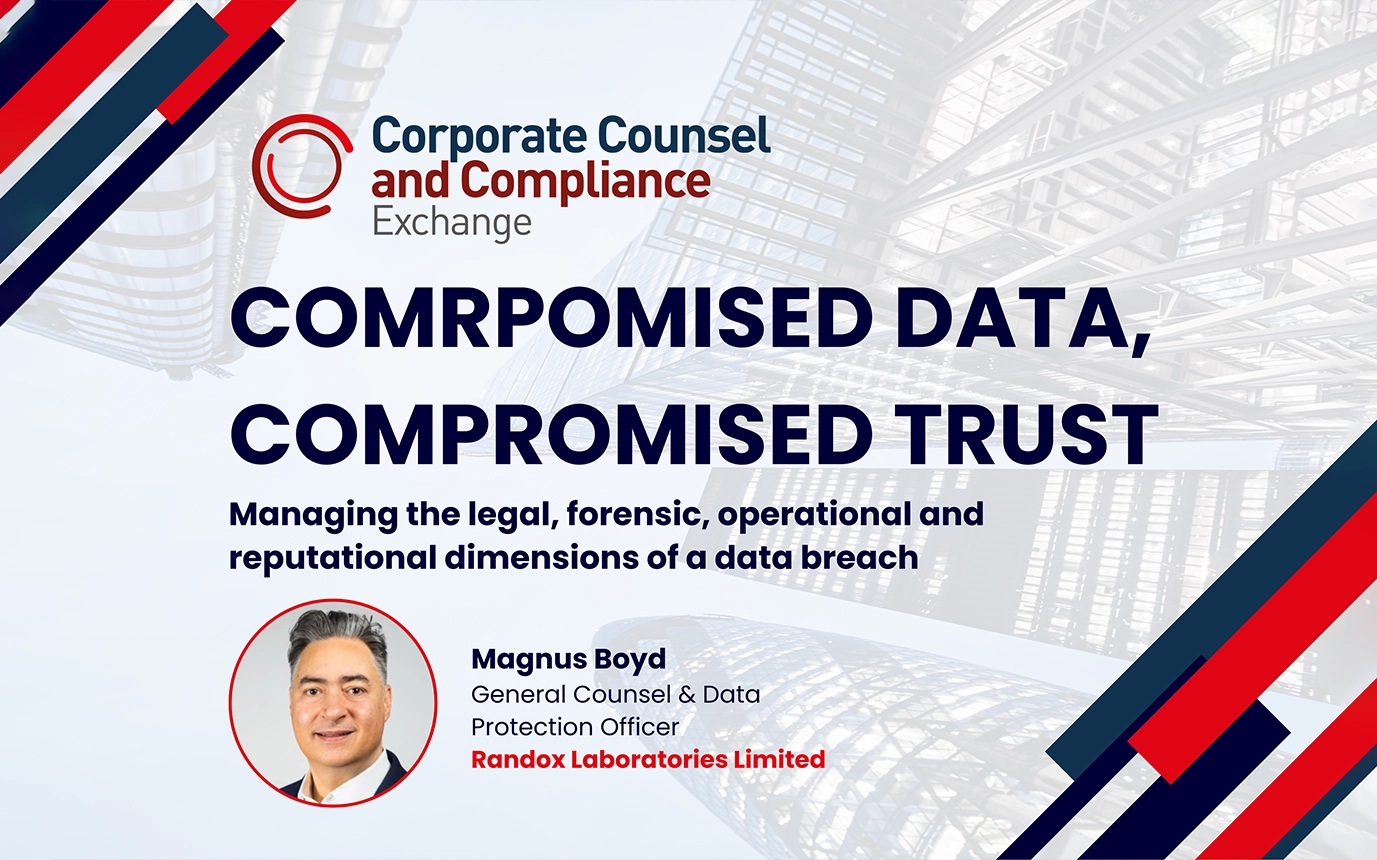

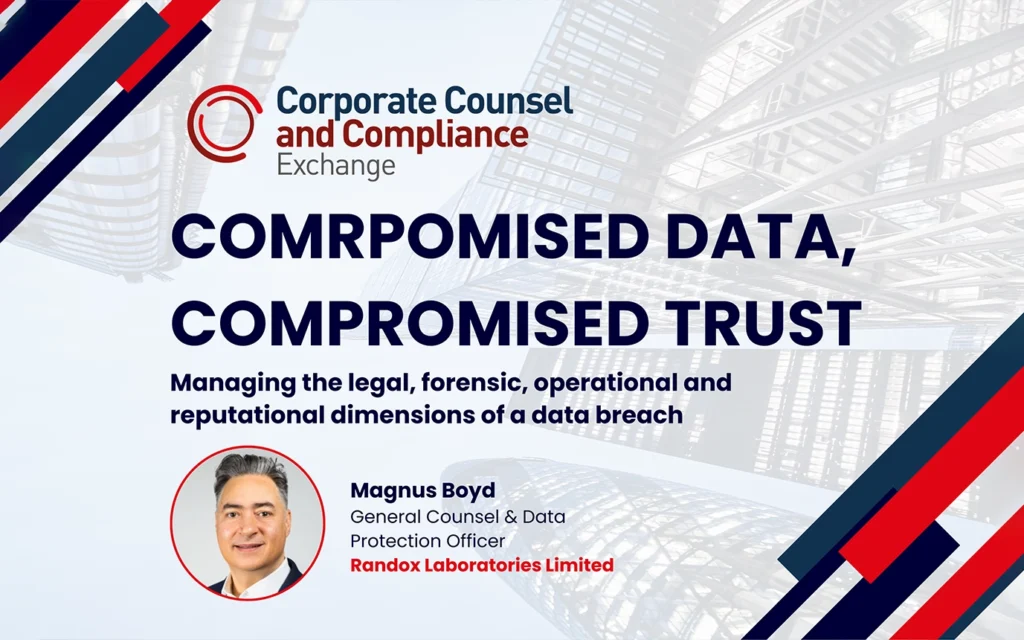
Data breaches have become a defining operational and reputational risk for modern businesses. But as Magnus Boyd, General Counsel & Data Protection Officer at Randox Laboratories, argues in his new whitepaper ‘Compromised Data, Compromised Trust’, the greatest damage rarely stems from the compromise itself. It stems from how the organisation responds.
A breach is no longer a technical mishap to be delegated to IT. It is a crisis of trust that demands alignment between legal, forensic, operational and communications functions. Organisations that emerge with credibility intact are not those with flawless defences, but those with coordinated leadership.
Why the first hours matter most
Magnus highlights a consistent challenge seen across recent incidents: companies lose control when internal functions operate in silos or when public communication moves faster than the facts. The first 72 hours determine whether an organisation maintains authority or fuels speculation.
An effective early response requires clear internal roles and decision ownership, immediate preservation of evidence, accurate, staged messaging and tight coordination across legal, cybersecurity, operations and communications
Speed is essential, but accuracy is critical. Public trust has suffered in past breaches where organisations under, or over, stated the scale before the facts were established.
Modern breaches demand a new kind of readiness
AI‑assisted attacks, supply‑chain exposures and data‑dump leak sites have transformed the incident landscape. Breaches are now designed to create maximum pressure at maximum visibility. Attackers increasingly release stolen data in stages to manipulate media cycles and accelerate stakeholder panic.
In this environment, Magnus stresses that breach readiness must be treated as an enterprise‑wide governance issue. Technical expertise alone is not enough. What matters is whether an organisation can:
- Investigate with rigour
- Communicate with clarity and candour
- Demonstrate accountability
- Show tangible organisational improvement in the aftermath
Empathy is now a critical component of response. Individuals affected by data loss expect clarity, guidance and a recognition of personal impact, not generic statements.
Reputation is shaped by behaviour, not by the breach
The public rarely distinguishes between controllers, processors or third‑party suppliers. Responsibility sits with the organisation they recognise. That makes consistency of messaging, internal alignment and disciplined governance essential across jurisdictions.
Silence, contradiction or defensiveness can quickly become the bigger story. Conversely, organisations that communicate clearly about what they know, what they do not yet know, and what they are doing next tend to retain trust even in high‑pressure situations.
Download the full whitepaper
Magnus Boyd’s whitepaper, ‘Compromised Data, Compromised Trust’, examines the four stages of breach response: containment, investigation, notification and evaluation, and provides a practical framework for in‑house leaders navigating reputationally sensitive incidents.
Want the full playbook for managing a breach with confidence? Download the full whitepaper here.
Join the conversation at the Corporate Counsel & Compliance Exchange UK
Magnus will speak at this year’s Exchange, taking place on 22-23 April 2026 at Hilton Syon Park, London, in a session called ‘A Framework for Minimising Reputational Risk – Reacting to a Data Breach’.
With data breaches making headlines almost weekly, this session will explore the frameworks organisations need to manage both incident containment and public‑facing response. Most reputational damage comes not from the breach itself, but from how a company reacts.
If you are interested in joining the discussion, request your invite now to join the handpicked lineup of Chief Legal Officers, General Counsel and Chief Compliance Officers in attendance at the Corporate Counsel and Compliance Exchange UK, to find out why an integrated, disciplined approach to a data breach is essential to maintaining credibility when it matters most, and be part of the conversation shaping the future of legal and compliance leadership.
Download the full Whitepaper to find out more or Request Your Invite now.